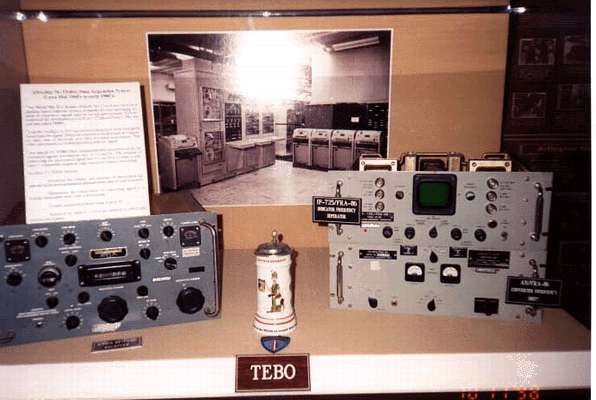
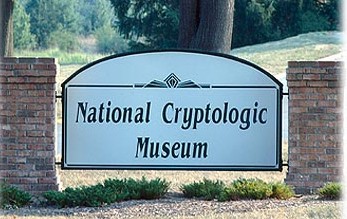
The National Cryptologic Museum and
the
Military Intelligence
Corps Hall of Fame
![]() |
| The museum is located very near
the National Security Agency Ft. Meade Maryland. It is roughly an hours drive from Washington DC (off peak). Free Admission Open to the Public: Monday-Friday 9:00-4:00 1st and 3rd Saturdays 10:00-2:00 Closed Sundays and Federal Holidays |
![]() |
To visit the NCM web site (which has a map and directions) click
here: http://www.nsa.gov/about/cryptologic_heritage/museum/
Their phone number is: 301-688-5849. In general, the Museum does
NOT prohibit the taking of photographs unless the artifact is sensitive
to light. There are no classified items on display. There is a gift
shop on site (most of the items are stamped NSA).

The Military Intelligence Corps Hall of
Fame
2009 Inductees
Brigadier General

Roy M. Strom
Command Sergeant Major
Odell
Williams
Command Sergeant Major
Ronald D.
Wright
Chief Warrant Office 3
Doris I
Allen
Major General
Robert A Harding
Major General
William E Harmon
Chief Warrant Officer 5
Wallace S.
Price

BIOS
Short Biography for Brigadier General Roy M. Strom
Brigadier General Roy M. Strom was commissioned as an Artillery Second Lieutenant in 1954 and reported to Artillery Officer Basic Course at Fort Bliss, Texas. His first assignment was as a Platoon Leader with the 764th Anti-Aircraft Artillery, at Fort Clayton, Panama Canal Zone. He also commanded the Caribbean Command Honor Guard Company honoring dignitaries visiting the Canal Zone. Then he attended Gunnery School at Fort Sill, Oklahoma, and subsequently reported to Airborne School at Fort Benning, Georgia. Upon his graduation from training CPT Strom reported to Columbus, Ohio as an Intelligence Officer assigned to the Field Office, 109th Counterintelligence Corps Group. Two and one half years later, he headed to Korea and served as the Officer in Charge of the Inchon Field Office, 502nd Military Intelligence Battalion until 1964. Returning from Korea, CPT Strom served for 19 months as the Aide-de-Camp to the Commanding General, U.S. Army Intelligence School, Fort Holabird, Maryland.
In 1967 MAJ Strom was assigned as the Intelligence Officer to the Army’s Alternate Command Post, Operations Group at Carlisle, Pennsylvania. After two years he took command in Vietnam of the 519th MI Battalion, 525th MI Group. From one successful command to another, in 1970 MAJ Strom took command of the 4th MI Battalion, 525th MI Group, responsible for intelligence operations in the Delta region. LTC Strom then reported to Munich, Germany where he took his third command, this time of the 18th MI Battalion, 66th MI Group. After passing the battalion colors, he served for 16 months as the Adjutant of the 66th MI Group. LTC Strom was then assigned to Washington, DC as a Counterintelligence Officer and Executive Officer in the Office of the Assistant Chief of Staff for Intelligence, U.S. Army. LTC Strom served just over two years before assuming the duties as the Deputy Commander, US Army Special Security Group in Washington, DC. This was followed by his attendance at the Industrial College of the Armed Forces. Moving to the Defense Intelligence Agency approximately one year later, LTC Strom became the Staff Chief, Special Intelligence Operations from 1977 to 1978.
In July of 1978, COL Strom took command of the 500th MI Brigade, Intelligence and Security Command at Camp Zama, Japan. He was among the first Brigade Commanders to play an instrumental role in the creation of the Intelligence and Security Command. Two years later, BG Strom was assigned to Fort Huachuca as the Deputy Commandant and then Commandant of the US Army Intelligence Center and School. Early in 1982, BG Strom returned to Washington, DC to become the Deputy Assistant Chief of Staff for Intelligence, U.S. Army.
BG Strom’s final assignment was as the Deputy Chief of Staff for Intelligence, Forces Command, Fort McPherson, Georgia. It was during this tour that he led the staff in developing a language maintenance program for the Reserve and Active forces. In March of 1985, BG Strom retired from active duty in the US Army after having served honorably for 31 years.
BG Strom’s awards and decorations include the Distinguished Service Medal, Legion of Merit, Bronze Star, Meritorious Service Medal with three Oak Leaf Clusters, National Defense Service Medal with one Oak Leaf Cluster, Vietnamese Service Medal, Department of Army Staff Badge, US and Vietnamese Parachutist Wings.
that he led the staff in developing a language maintenance program for the Reserve and Active forces. In March of 1985, BG Strom retired from active duty in the US Army after having served honorably for 31 years.
BG Strom’s awards and decorations include the Distinguished Service Medal, Legion of Merit, Bronze Star, Meritorious Service Medal with three Oak Leaf Clusters, National Defense Service Medal with one Oak Leaf Cluster, Vietnamese Service Medal, Department of Army Staff Badge, US and Vietnamese Parachutist Wings.
Short Biography for Command
Sergeant Major Odell Williams
Command Sergeant Major Odell Williams entered the US Navy Reserves in 1955 and served as an Aircraft Mechanic and Firefighter. Later, in 1960, he entered the US Army and attended the Manual Morse Collector’s Course at Fort Devens, Massachusetts. In 1961, SPC Williams was assigned as a Morse Interceptor at Vint Hills Farms Station, Virginia until October of the same year. The following month, he reported to the 5th Radio Research Unit, Bangkok, Thailand as a Morse Interceptor. SPC Williams returned to the US in 1963 and served two more assignments as a Morse Interceptor: first with the 303rd Army Security Agency (ASA) at Fort Carson, Colorado, and then at Fort Lewis, Washington with the 303rd ASA.
In 1965, SSG Williams was assigned as a Senior Morse Interceptor with Detachment 2, 3rd Radio Research Unit in Vietnam. One year later, he departed Vietnam to be the Senior Morse Instructor, U.S. ASA Training Center, Fort Devens. SSG Williams remained as an instructor at Fort Devens for three years.
Beginning the fall of 1969, SFC Williams served as a Morse Supervisor at US Army Field Station, Japan. SFC Williams was then selected to be the First Sergeant of Alpha Company, Field Station, Japan, where he remained for two years before being reassigned to technical training in the Cryptology Supervisor Course and then to leadership training at Senior NCO training at Fort Devens. Following training, SFC Williams served as a Senior Instructor with the Operations Company, Support Battalion, Fort Devens until 1974, and then as First Sergeant for F Company, 2nd Battalion. In 1976 he was assigned to Headquarters and Headquarters Company, USA Field Station, Korea where he served as Mission Management Supervisor and Operations Sergeant until 1977. SFC Williams then served as First Sergeant with the Operations Company, Field Station Korea. MSG Williams returned to Fort Devens to serve once again as the First Sergeant of F Company, 2nd Battalion for two years before reporting for training at the U.S. Army Sergeant Major Academy at Fort Bliss, Texas.
In 1980, he served as Operations Sergeant, US Army Field Station Germany before being selected and serving as the S-3, Operations Sergeant.
CSM Williams was then selected as the Command Sergeant Major for the U.S. Army Station in Kunia, Hawaii in 1982. In 1985 he became the Senior Enlisted Advisor to the National Security Agency (NSA) in Maryland. He was the first-ever Command Senior Enlisted Advisor to the Director of the NSA. His leadership and intelligence support were instrumental in operations such as the TWA hijacking in Lebanon in June 1985, the rescue of the Achille Lauro in October 1985, and the bombing raid in Libya in April 1986. CSM Williams retired in 1988 after honorably serving 33 years with a distinguished career in Army Intelligence. CSM (R) Odell Williams passed away in 2002.
CSM Williams’ awards and badges include the Distinguished Service Medal, Legion of Merit, Bronze Star, Meritorious Service Medal with six Oak Leaf Clusters, National Defense Service Medal with Oak Leaf Cluster, Vietnamese Service Medal, and Department of Army Staff Badge.
Short Biography for Command Sergeant Major Ronald D. Wright
Command Sergeant Major Ronald D. Wright is a native of Fort Smith, Arkansas. He served in the US Air Force from 1971 to 1975 as a Parachute Rigger. In 979, he enlisted in the US Army as an Intelligence Analyst. SPC Wright served as the Senior Intelligence Analyst and as the Assistant Non Commissioned Officer In Charge of the Battle Information Coordination Center, 3rd Brigade, 101st Airborne Division, Fort Campbell, Kentucky. SGT Wright was then assigned to
the Headquarters and Headquarters Company, 2nd Armored Division (Forward) in Germany. Because of his leadership and professionalism he was selected as the Noncommissioned Officer of the Year for U.S. Army, Europe in 1983.
SSG Wright returned to the US and served as an instructor, Intelligence Analyst Course, US Army Intelligence Center and School, Fort Huachuca, Arizona. He then became Senior Instructor for the Noncommissioned Officer Academy until 1986, teaching Intelligence Analysis. In 1987 he returned to Germany and served as the First Sergeant for Headquarters and Headquarters Battery, 56th Field Artillery Command (Pershing Missile). In 1990, MSG Wright reported to the 111th Military Intelligence Brigade, Fort Huachuca, where he became the Operations Sergeant Major, responsible for planning, operations, and training of over 6,000 officer and enlisted personnel. After eight months, MSG Wright served as the First Sergeant of Charlie Company, 304th MI Battalion, 111th MI Brigade, the only deployable Pioneer Unmanned Aerial Vehicle (UAV) Company in the U.S. Army. His leadership was instrumental in the development of the 96U MOS, Tactical UAV Operator. He also served as a subject matter expert, briefing senior Army leadership on the UAV program. He helped develop policies and procedures for UAV airspace management, ensuring the safety of air traffic. 1SG Wright was selected for promotion to Command Sergeant Major and attended the Command Sergeant Major’s course.
In 1994, CSM Wright reported to Fort Hood, Texas as the Command Sergeant Major, 522nd MI Battalion, 2nd Armored Division, later reflagged as the 104th MI Battalion, 4th Infantry Division. Two years later, CSM Wright returned to Germany to become the Command Sergeant Major, 302nd MI Battalion, 205th MI Brigade, and then as the 205th MI Brigade Command Sergeant Major. CSM Wright was chosen to be the Command Sergeant Major of the US Army Intelligence and Security Command (INSCOM), Fort Belvoir, Virginia. CSM Wright’s leadership was instrumental to INSCOM’s architecture, force structure, training, budgeting, and combat development. At the time INSCOM was responsible for over 12,500 Soldiers and civilians located in 21 countries around the world. CSM Ronald Wright retired in 2001 after serving his country honorably for 26 years.
CSM Wright’s awards and decorations include the Distinguished Service Medal, Meritorious Service Medal with four Oak Leaf Clusters, Army Commendation Medal with three Oak Leaf Clusters, Army Superior Unit Award, National Defense Service Medal (2nd award), Vietnam Service Medal, NATO Medal, Republic of Vietnam Campaign Medal, and Army Air Assault Badge.
Short Biography for Chief Warrant Officer Three Doris I. Allen
Chief Warrant Officer Three Doris I. Allen is a native of El Paso, Texas. She enlisted in the Women’s Army Corps through Jackson, Mississippi in 1950. PFC Allen first served as an Entertainment Specialist, organizing Soldier shows and as the Editor for the military newspaper at Camp Sendai, Japan during the Korean War. Returning from Japan, CPL Allen was stationed at Camp Stoneman in California as a Radio Broadcast Specialist. After its closing, SPC 5 Allen was assigned to Oakland Army Base and then attended the Armed Forces Information School at Fort Slocum, New York. In 1956, SPC 5 Allen returned to Japan for two years as a Public Information Officer and Newspaper Editor. SPC 5 Allen returned to the U.S., and beginning in 1958, served as an Information Specialist, Fort Monmouth, New Jersey. After completing French language training at the Defense Language Institute (DLI) in 1963, she became the first female to attend the Prisoner of War Interrogation course at the U.S. Army Intelligence School, Fort Holabird, Maryland. For the next two years she was the sole Strategic Intelligence Analyst covering Latin America affairs at the U.S. Continental Army Command Intelligence Center, Fort Bragg, North Carolina.
SPC 7 Allen reported to Vietnam in 1967 and served as the Senior Intelligence Analyst, Army Operations Center, 1st Logistical Command, Headquarters, U.S. Army at Long Binh. During her second tour in Vietnam, she held the position of Supervisor, Security Division, Office of the Assistant Chief of Staff, Security, Plans, and Operations Headquarters. In 1970 she was promoted to Warrant Officer (WO) and became one of only nine female warrant officers in Military Intelligence and one of 23 in the entire Army. WO Allen began her third consecutive tour in Vietnam as the Officer in Charge of the Translation Branch, Combined Document Exploitation Center in Saigon. Despite not being able to speak Vietnamese, WO Allen led 40 South Vietnamese nationals translating captured documents brought to the Center. Her loyalty, diligence, and devotion earned her the Bronze Star with two Oak Leaf Clusters.
Returning from Vietnam, WO Allen served as an Instructor for Prisoner of War Interrogations training, Army Intelligence Center and School, Fort Holabird, Maryland and remained with the school upon its move to Fort Huachuca, Arizona. After completing the Counterintelligence Transition Course in 1971, WO Allen returned to DLI and attended German language training. Her follow-on assignment was as a Special Agent for the 527th Military Intelligence Battalion in Kaiserslautern, Germany. In 1977, WO Allen served as the Senior Counterintelligence Agent and Security Manager at the U.S. Army Intelligence and Security Command, Counterintelligence and Signal Security Battalion, Presidio of San Francisco. While at the Presidio, Chief Allen was promoted to Chief Warrant Officer Three in 1978. In 1980, CW3 Allen retired after a 30 year distinguished career of honorable service in the Army.
CW3 Allen’s awards and decorations include the Bronze Star with two Oak Leaf Clusters, Meritorious Service Medal, Army Commendation Medal, National Defense Service Medal with one Oak Leaf Cluster, Vietnam Service Medal (10 Campaigns), United Nations Service Medal, the Republic of Vietnam Campaign Medal, Korean Service Medal, Presidential Unit Citation, Meritorious Unit Commendation, and the Vietnam Cross of Gallantry with Palm.
Short Biography for Major General Robert A. Harding
Major General Robert A. Harding is a native of New York City, New York and was commissioned as a Second Lieutenant from Officer Candidate School, Fort Belvoir, Virginia in 1969. In his first assignment, 2LT Harding served as an Intelligence Research Officer with the 108th Military Intelligence Group based at Fort Devens, Massachusetts. Soon thereafter, he reported to Korea, where then CPT Harding commanded the Field Office for the 502nd MI Battalion from 1971 to 1972. During the following year, he served as a Team Leader, first with the 14th MI Battalion, then with the 519th MI Battalion located at Fort Bragg, North Carolina. Commanding for a second time, CPT Harding was in charge of Headquarters Company, 1st MI Battalion, at Fort Bragg, North Carolina.
In early 1975, CPT Harding was assigned as a Strategic Intelligence Officer to the Defense Intelligence Agency (DIA) where he served until 1978 when he was sent overseas to Germany. CPT Harding served first as the S2 of the 1-59th Air Defense Artillery, 8th Infantry Division and then as the S2 for the 1st Brigade, 8th Infantry Division. Returning stateside, MAJ Harding was assigned as the Professional Development Officer, U.S. Army Military Personnel Center, in Alexandria, Virginia. Two years later, MAJ Harding reported in as a student to the Armed Forces Staff College in Norfolk, Virginia. Upon graduation, MAJ Harding assumed the duties of Executive Officer, U.S. Army Intelligence Operations, in Washington, DC. In 1985, MAJ Harding served for two and half years as the Assistant to the Director of the Army Staff, in the Pentagon.
LTC Harding was selected to command the 524th MI Battalion, Eighth U.S. Army in Korea from 1988-1990. Returning from Korea, LTC Harding attended the U.S. Naval War College, Newport, Rhode Island. From 1991 to 1992, COL Harding served as the Assistant Deputy Chief of Staff for Operations and Plans, U.S. Army Intelligence and Security Command, at Fort Belvoir, Virginia. Selected for Brigade Command, COL Harding commanded the 902nd MI Group located at Fort Meade, Maryland, for the next two years. After successful Brigade Command, COL Harding was assigned as the Executive Officer to the Deputy Chief of Staff for Intelligence, U.S. Army in the Pentagon.
In 1995, COL Harding reported to Quarry Heights, Panama and served as the Director of Intelligence (J2) for the U.S. Southern Command, where he led the planning and execution of intelligence support to military operations, including contingency planning and crisis actions. Upon completing his duties as the J2, BG Harding returned to the DIA as the Director for Operations from 1996 to 2000. BG Harding was promoted to Major General in 1999. MG Harding’s final assignment was as the Assistant Deputy Chief of Staff for Intelligence, U.S. Army, Washington, DC. MG Harding concluded his distinguished Army Intelligence career of 32 years when he retired in 2001.
MG Harding’s awards and decorations include the Defense Superior Service Medal, the Legion of Merit with three Oak Leaf Clusters, the Defense Meritorious Service Medal, the Army Meritorious Service Medal with two Oak Leaf Clusters, and Army Staff Identification Badge.
Short Biography for Major General William E. Harmon
Major General William E. Harmon was commissioned as an Infantry Second Lieutenant in the summer of 1960 and reported for the Infantry Officer Basic Course at Fort Benning, Georgia. Serving less than two years in the Infantry, in 1962 LT Harmon was detailed to Army Intelligence. He received training at the Intelligence Research Officer Course, U.S. Army Intelligence School at Fort Holabird, Maryland. While at Fort Holabird, he transferred to the newly formed Army Intelligence and Security Branch.
His first MI field assignment was in 1963 as a Counterintelligence Officer with the 201st MI Detachment, I Corps Group Headquarters at Uijongbu, Korea. One year later, CPT Harmon returned to the U.S. and served as the G2 Security and Automation Officer assigned to the 11th MI Detachment, 11th Air Assault Division at Fort Benning, Georgia, during the Army field testing of the Air Assault Concept. In 1965 CPT Harmon reported as the Plans Officer, 519th MI Battalion to plan the movement of the 525th MI Group to Vietnam. In Vietnam, he was the Counterintelligence Officer for Detachment C-5 (Project Horse) attached to the 5th Special Forces Group. CPT Harmon returned to Fort Holabird in 1967 to attend the MI Officer Advanced Course and was then assigned to the Office of the G2, Fort Shafter, Hawaii at the Korea Desk, and then reassigned to the Vietnam Desk following the Tet Offensive.
MAJ Harmon returned to Vietnam and served as J2, U.S. Military Assistance Command Vietnam. In 1970 MAJ Harmon attended the U.S. Army Command and General Staff College, and after graduation reported to the British Intelligence Staff in London, England to study the Soviets. After three years in England, MAJ Harmon assumed command of the 203rd MI Detachment, III Corps at Fort Hood Texas. Following command in 1976, he became the G2, 2nd Armored Division, at Fort Hood, Texas. In 1977, LTC Harmon assumed command of the 522nd MI Battalion (CEWI) in support of 2nd Armored Division. Following battalion command, LTC Harmon attended the U.S. Army War College at Carlisle Barracks, Pennsylvania.
Graduating from the War College, COL Harmon became the Director, Signal Intelligence Division, Office of the Assistant Chief of Staff for Intelligence, U.S. Army. For one year he would serve in the Pentagon before returning in 1980 to Fort Bragg to become the XVIII Airborne Corps Deputy G2. In 1981, COL Harmon was selected for Brigade command and was handed the colors of the 525th MI Group (CEWI), XVIII Airborne Corps. He would command the Group for two and half years. In 1983, COL Harmon became the Director, Intelligence Systems Directorate, Office of the Assistant Chief of Staff for Intelligence, U.S. Army.
From 1984 until 1990, BG Harmon was the Program Manager, Joint Tactical Fusion Program Management Office, Office of the Deputy Chief of Staff for Operations and Plans, U.S. Army. His final assignment was as the Program Executive Officer for Command and Control Systems, Fort Monmouth, New Jersey. MG William Harmon retired in 1992 after a distinguished career spanning 32 years.
MG Harmon’s awards and decorations include the Distinguished Service Medal,
Legion of Merit, Bronze Star Medal with two Oak Leaf Clusters, Meritorious Service
Medal with one Oak Leaf Cluster, Joint Service Commendation Medal, Master Parachutist Badge, Ranger Tab and the Army Staff Identification Medal.
Short Biography for Chief Warrant Officer Five Wallace S. Price
A native of Oregon, Chief Warrant Officer Five Wally Price began his Army career in 1966 with the Army Security Agency (ASA). Following Defense Language Institute (DLI) for Czech language training and AIT at Goodfellow AFB, he was assigned to Detachment J, 16th ASA Field Station, Germany. He separated from the Army in 1970 after providing intelligence support for US Army Europe and NATO commands during the Warsaw Pact invasion of Czechoslovakia. In 1975, PFC Price returned to active duty, and was assigned as a Czech Technical Language Advisor at DLI, where he worked with native instructors to provide training in MOS-related military and technical terminology.
In 1976 he was appointed as a Warrant Officer, returned to Germany, and served as a Watch Supervisor overseeing operations at the U.S. Army Field Station, Germany. He achieved certification by the National Security Agency (NSA) as a Voice and Language Analyst and became proficient in three languages: Czech, Russian and German. WO Price returned to DLI in 1980 for advanced language training in Czech. After graduating with honors, he remained as a Training Officer in the Slavic Language Group until 1981. Heading to Fort Devens, Massachusetts, WO Price became the Chief Instructor and Officer In Charge of the Cryptologic Linguist Task Force. Chief Price returned to Germany in 1983 and served on the task force responsible for transitioning Field Stations to the 701st Military Intelligence Brigade.
Returning from Germany to Fort Meade, Chief Price served as the Senior Technician and Deputy Branch Chief, Operations Group A, NSA. During Operations DESERT SHIELD and DESERT STORM, he served as a team lead, directing Signals Intelligence operations in the Cryptologic Support Group at CENTCOM Forward Headquarters in Saudi Arabia. In 1992, he became the Deputy Chief, Exploitation and Production, at Menwith Hill Station, England. CW5 Price helped lead Support Military Operations efforts for Operations PROVIDE COMFORT, NORTHERN and SOUTHERN WATCH in Southwest Asia, and in support of NATO operations in the Balkans.
CW5 Price returned to Fort Meade in 1993 as the Team Chief and NSA Representative to the National Military Command Center, where he helped establish the Cryptologic Support Team and Cryptologic Support Group at the National Military Joint Intelligence Center. In 1995, CW5 Price transferred to the 344th MI Battalion at Goodfellow AFB, Texas as the OIC of 98G training, overseeing all Army SIGINT/EW linguist training. In 1997, he was selected as Senior Technical Advisor in the Army Technical Control and Analysis Element to the 704th MI Brigade. Following the 9-11 attacks and onset of Operation ENDURING FREEDOM, CW5 Price helped create the first US-Canadian SIGINT/EW Operations Coordination Center in Afghanistan. In 2003, CW5 Price served as the Special Assistant for Military Affairs to the SIGINT Director, NSA. CW5 Price retired from the U.S. Army after 35 years of distinguished service.
CW5 Price’s awards and decorations include the Defense Superior Service Medal with Oak Leaf Cluster, Legion of Merit, Bronze Star Medal, Defense Meritorious Medal, Meritorious Service Medal with Oak Leaf Cluster, Joint Services Commendation Medal, Army Commendation Medal with Oak Leaf Cluster, Army Achievement Medal, and the Joint Chiefs of Staff Identification Badge.
MI Hall of Fame Inductees
2008
|
Colonel Jon M. Jones |
LTC James A.
Chambers |
Lieutenant General James C.
King |
|
Major General Robert L. Halverson (U.S. Army, Retired) |
SIES Thomas Dillon (U.S. Army, Retired) |
|
CWO5 Ivan Sarac |
CWO5 Lon Castleton |
Maj. Gen. Roderick Isler |
|
Maj. Yoshio George Kanegai |
Ms. Jean Bennett, DISES-4 |
Col. Lawrence SchneiderML?> |
2006
| Col. Jon M. Jones (D) | LTC James A. Chambers (R) | Lt Gen. James C. King (R) |
| MajGen Robert L. Halverson (R) | . | SIES Thomas Dillon (R) |
2005
| COL (R) Thomas F. McCord | MG (R) John A. Leide | CW5 (R) Rex A. Williams |
| CW4 (R) Dennis E. Renken | . | CSM (R) James A. Johnson |
2004
| Command Sgt Maj John butler | Command Sgt Maj Robert Hall | Lt Gen Claudia Kennedy |
| Lt Gen Robert Noonan | Major Kenneth L. Robinson | Command Sgt Maj Debra Smith |
| CW4 Doug C. Edgell | COL Alfred Elliot III | COL David A. McNight | CSM John P O'Connor |
| CW4 Ben E. Peets | MG John D Thomas Jr | CPT Humbert R. Versace | . |
| COL Richard E. Allenbaugh | LTG Donald L. Kerrick | CW5 Michael J. Maroney | LTG Ira C. Owens |
| MAJ Walter Unrath | . | . | . |
| CW5 Michael Fried | CSM Randolph S. Hollingsworth | CSM Raymon V. Lowry |
| MG Charles W. Thomas | . | LTG Patrick M. Hughes. |
| Mr. Theodor Hans | CSM Sterling T. McCormick | MAJ Charles D. McKee | CW3 Sherman C. Reagan |
| COL John F. Concannon | COL Byron K. Dean | Mr. William L. Parkinson | LTC Robert V. Taylor |
| COL Harold W. Vorhies | COL Charles D. Young | . | . |
| CSM Raymond McKnight | LTG Paul E. Menoher | COL Seth F. Nottingham |
| SES-5 James D. Davis | SFC Benjamin T. Hodge | MSG Roy H. Matsumoto | MG John E. Stewart, Jr. |
| SPC Harry M Akune | COL John H. Black | COL Robert Kelly | COL James H. P. Kelsey |
| LTC Thomas Knowlton | MAJ Kan Tagami | . | . |
| Ms. Mary Elizabeth Bowser | 1LT Charles B. Gatewood | LTC Gero Iwai | MG Charles F. Scanlon |
| LTG Harry E. Soyster | . | . | . |
| CW4? Robert P. Donohue | CSM David P. Klehn | Mr. Kenneth T. Koeber | Mr. Joseph P. Luongo |
| MG Cloyd H. Pfister | COL Charles S. Simerly | . | . |
|
BG Oscar W. Koch |
CWO Joseph E. Richard | Mr. Herbert W. Taylor | Ms. Elizabeth Van Lew |
| COL William P. Walters | . | . | . |
| MSG Travis C. Bunn | LTG Charles B. Eichelberger | COL William H. Garner | LTC Billy C. Rea |
| Mr. Edward Ryback | Mr. Junius A. Watlington | . | . |
| Col John F. Aiso | Mr. Herbert S. Hovey, Jr. | CWO Robert A. Leigh | Col Duwayne C. Lundgren |
| LTC Arthur D. Nicholoson, Jr. | COL John A. Pattison | Mr. Paul R. Shoemaker | . |
| COL Donald W. Blascak | MAJ John R. Boker, Jr. | COL John A. Bross | Douglas C. Dillard |
| SP5 edward W. Minnock | MG Julius Parker, Jr. | CW4 William T. Ragatz | CSM Louis H. Rothenstein |
| MG Albert N. Stubblebine | BG George J. Walker | LTG Sidney T. Weinstein | COL Jerry G. Wetherill |
| MSG John R. Wilson | . | . | . |
| SP5 Gerals L. Beatson | MAJ Ann Bray | CSM Clifford L. Charron | MG Garrison B. Coverdale |
| COL George R. Eckman | LTC Gordon R. Huff | Mr. John T. Hughes | LTC William E. Odom |
| Countess Aline Griffith Romanones | COL James N. Rowe | . | . |
| LTG Harold R Aaron | 1LT Gardiner P. Allen | MSG Lorenzo Alvarado | COL Alfred W. Bagot |
| BG Daneil Bissell, Jr. | COL John M. Carr | LTG Marshall S. Carter | BG Marlborough Churchill |
| Dr. Rankin A. Clinton | MG W. Preston Corderman | LTC Mercedes Cubria | COL Elvin J. Dalton |
| LTG Phillip B. Davidson, Jr | LTG John J. Davis | MG Charles J. Denholm | SGT Peter de Pasqua |
| William J. Donovan | Ms. Sarah Emma Edmunds | Carl F. Eifler | BG Orlando C. Epp |
| Richard E. Evers | LTG Alva R. Fitch | MG Thomas J. Flynn | MG Bebjamin D. Foulois |
| William Friedman | Harry K. Fukuhara | 1LT Charles B. Gatewood | LTG Daniel O. Graham |
| Miss Virginia Hall | Senator Chick Hecht | LTC Ethan A. Hitchcock | COL Parker Hitt |
| COL Leland J. Holland | CSM Clovis D. Ice | MAJ William I. Jennings | Mr. Edmund C. Jilli |
| PFC Stanley W. Kapp | Mr. Merrill T. Kelly | Mrs. Lillian Klecka | CWO Arthur S. Komori |
| COL Solomon T. Kullback | Mr. Thaddeus S. C. Lowe | COL Paul R. Lutjens | CWO Theodore M. Mack |
| COL Sidney F. Mashbir | Mr. Hisashi J. Masuda | MG Joseph O. Mauborgne | MG Joseph A. McChristian |
| CW3 Ann M. McDonough | COL John J. McFadden | 1LT Edward R. Moore | MG Dennis B. Nolan |
| COL Boris T. Pash | COL Peter A. Petito | Mr. Allan Pinkerton | COL Kai E. Rasmussen |
| Mr. Kurt Rosenow | COL Franz Ross | Robert C. Roth | COL Andrew S. Rowan |
| LTC Richard M. Sakakida | COL Harold R. Shaw | COL Joe R. Sherr | CPL Irving A. Stein |
| MG Archibald W. Stuart | MAJ Benjamin Tallmadge | CPT Daniel M. Taylor | LTG Arthur G. Trudeau |
| MG Ralph Van Deman | COL William F. Vernau | COL Eric Vieler | MG Charles A. Willoughby |
| LTG William P. Yarborough | MAJ Herbert O. Yardley | . | . |
| MG James E. Freeze | George W. Goddard | MG George A. Godding | CSM George W. Howell, Jr |
| COL Frederick W. Johnston III | Mrs. Dorothe K. Matlack | LTG William E. Potts | LTG William I. Rolya |
| COL Abraham Sinkov | MG Edmund R. Thompson | LTG Vernon A. Walters | COL Norman S. Wells |
| LTG James A. Williams | LTG John R. Wilson | . | . |
1. The above tables may contain errors. If you know of any, please
contact asachitose@yahoo.com
2.
Many, many thanks to Bill Reich for supplying the basic year edition
of the Hall of Fame list.